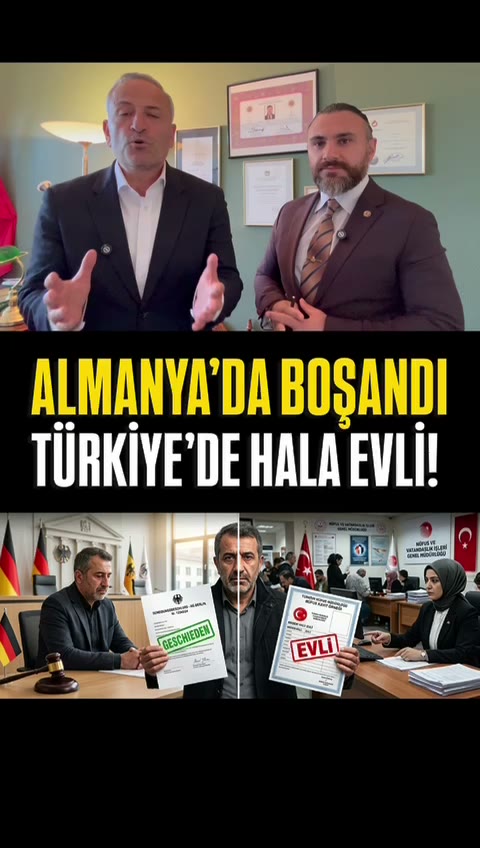
This guide explains how the Turkish maintenance system works from the ground up — the four types of nafaka, how each is calculated, how enforcement works in Turkey, and how cross-border recognition operates between Turkey and Germany.
The Four Types of Maintenance (Nafaka) Under Turkish Law
The Turkish Civil Code (Türk Medeni Kanunu — TMK) recognises four distinct maintenance obligations:
| Type | Legal Basis | When it Applies |
|---|---|---|
| Tedbir Nafakası (Interim maintenance) | Art. 169 TMK | During divorce proceedings |
| Yoksulluk Nafakası (Spousal maintenance) | Art. 175 TMK | After divorce is finalised |
| İştirak Nafakası (Child support) | Art. 182 TMK | After divorce, until child reaches majority |
| Yardım Nafakası (Family/relative maintenance) | Art. 364–365 TMK | Between relatives in direct line when in need |
Each type has its own conditions, calculation method, and duration. Understanding which type is relevant to your situation is the starting point for any nafaka claim or defence.
Tedbir Nafakası: Interim Maintenance During Proceedings
Once a divorce petition is filed, Art. 169 TMK requires the court to set provisional maintenance (tedbir nafakası) of its own motion — the applicant does not need to make a separate request. This maintenance covers the basic needs of both spouses and any children during the often lengthy divorce proceedings.
Key characteristics:
For couples where one spouse is in Germany and the other in Turkey: tedbir nafakası is set by the Turkish court if the divorce petition is filed in Turkey. A German-resident spouse's living costs in Germany will be factored into the assessment.
Yoksulluk Nafakası: Turkish Spousal Maintenance After Divorce
Yoksulluk nafakası (literally: poverty maintenance) is Turkish law's mechanism for ongoing spousal support after the divorce is finalised. It is considerably more restrictive than its German (§§ 1569–1580 BGB) or English (Matrimonial Causes Act 1973) equivalents.
The Three Conditions (Art. 175 TMK)
Condition 1: Actual Poverty Caused by the Divorce (Yoksulluğa Düşme)
The claimant must demonstrate that the divorce itself will cause them to fall into poverty — an inability to meet basic living expenses from their own means. Merely having a reduced standard of living after divorce is insufficient. The causal link between the divorce and the poverty must be established.
Condition 2: Fault Threshold (Kusur Koşulu)
The claimant must not be more at fault for the breakdown of the marriage than the other spouse. Under Turkish Supreme Court (Yargıtay) case law, equal fault allows a maintenance claim; but a spouse who bears the greater share of fault for the divorce is entirely barred. This fault element has no equivalent in modern German or English maintenance law.
Condition 3: Financial Capacity of the Paying Spouse
The paying spouse must have the means to make the payments. A maintenance order against someone with genuinely no income or assets is unlikely to be granted.
How Is the Amount Determined?
There is no fixed formula. Turkish family courts exercise broad discretion, weighing:
Maintenance can be ordered as a monthly payment or as a lump sum (toplu ödeme) if the parties agree or the court deems it appropriate.
How Does Yoksulluk Nafakası End? (Art. 176(3) TMK)
The obligation terminates when:
The paying spouse can bring a modification claim (nafaka uyarlama davası) at any time if circumstances materially change — for example, if the claimant obtains stable employment, or if the payer's income significantly decreases.
İştirak Nafakası: Child Support After a Turkish Divorce
Art. 182 TMK requires the court to determine child support as part of the divorce judgment — setting the obligation on the parent who does not have custody to pay iştirak nafakası to help cover the child's needs.
Calculation: No Table System
Unlike Germany (Düsseldorfer Tabelle) or the UK (Child Maintenance Service formula), Turkey has no standardised child maintenance table. The court assesses each case individually, applying the following criteria:
| Criterion | What Courts Consider |
|---|---|
| Child's needs | School fees, health costs, clothing, food, housing |
| Paying parent's income | Salary slips, tax returns, other income sources |
| Paying parent's assets | Property, savings, business interests |
| Custodial parent's income | Reduces the assessed need accordingly |
| Life standard during marriage | Upper reference point for the child's needs |
In practice, Turkish courts have informally gravitated toward a range of roughly 20–40% of the paying parent's net monthly income for one child, but this is judicial tendency rather than statutory rule.
Duration
Child support is paid until the child reaches 18 years of age (majority under Turkish law). If the child continues in full-time education and is not economically independent, the court can extend the obligation beyond age 18 on application.
Modification
Either parent can bring a nafaka uyarlama davası (modification claim) before the Aile Mahkemesi (family court) if circumstances have materially changed: the payer's income has dropped significantly, the child's needs have increased, or the general cost of living in Turkey has risen substantially. Given Turkey's inflation environment in recent years, modification claims have become particularly common.
Yardım Nafakası: Family and Relative Maintenance
Articles 364–365 TMK impose mutual maintenance obligations between relatives in the direct line of descent — parents and children, grandparents and grandchildren — when one party cannot meet their own basic living costs.
Conditions:
For members of the Turkish diaspora in Germany: a parent in Turkey can bring a yardım nafakası claim before a Turkish court against an adult child living in Germany. The legal obligation exists; its enforcement cross-border follows the same recognition framework as other Turkish maintenance orders.
Enforcement in Turkey: What Happens When Maintenance Is Not Paid?
Turkish law takes maintenance non-payment seriously.
Coercive Detention (Tazyik Hapsi) — Art. 344 İİK
When a maintenance debtor intentionally fails to pay a final maintenance order, the creditor can apply to the enforcement office for the debtor's detention for up to three months. This is not a criminal sentence — it is a civil enforcement tool (tazyik hapsi: coercive imprisonment). The detained person is released the moment they pay the outstanding arrears.
This sanction is a powerful lever in practice, particularly for maintenance creditors pursuing debtors who have assets or employment in Turkey.
Wage and Account Garnishment
Turkish enforcement offices (İcra Müdürlüğü) can attach:
Maintenance creditors can pursue multiple enforcement routes simultaneously.
Cross-Border Enforcement: Turkish Orders in Germany
Because Turkey is not an EU member state, the EU Maintenance Regulation (No. 4/2009) does not apply in the Turkey–Germany relationship. Instead, two international conventions govern:
1. The 1973 Hague Convention on the Recognition and Enforcement of Decisions Relating to Maintenance Obligations
Both Turkey and Germany are contracting states. This convention facilitates mutual recognition of maintenance decisions.
2. The 1956 UN Maintenance Convention (New York Convention)
Also ratified by both countries. Establishes an administrative and judicial cooperation framework for cross-border maintenance recovery.
The Recognition Process in Germany
Cross-Border Enforcement: German Orders in Turkey
A final German maintenance order (court judgment, enforceable notarial deed) can be made executable in Turkey through a tanıma ve tenfiz (recognition and enforcement) application to the competent Turkish Asliye Hukuk Mahkemesi.
Required documents:
The Turkish court examines: reciprocity between the two countries' systems, compliance with Turkish public order (kamu düzeni), and the absence of a conflicting Turkish judgment. Once granted, enforcement proceeds through İcra Müdürlüğü offices.
Which Law Applies? The Conflict-of-Laws Problem
This is the most technically complex aspect of Turkish-German maintenance disputes — and one that significantly affects outcomes.
The German Side
German courts apply the Hague Protocol of 2007 to determine the applicable law for maintenance obligations. The Protocol points to the law of the maintenance creditor's habitual residence. Turkey is not a party to the Hague Protocol — but German courts still apply it, effectively pointing to Turkish law if the creditor lives in Turkey, or German law if they live in Germany.
The Turkish Side
Turkish private international law (MÖHUK, Art. 16) applies the same general rule: the law of the maintenance creditor's habitual residence governs. If the creditor lives in Germany, German law applies (from the Turkish perspective); if in Turkey, Turkish law applies.
The Practical Consequence
| Scenario | Applicable Law |
|---|---|
| Creditor in Germany, proceedings in Germany | German maintenance law |
| Creditor in Turkey, proceedings in Turkey | Turkish maintenance law |
| Creditor in Germany, proceedings in Turkey | Turkish court applies German law (MÖHUK m. 16) — but may apply Turkish law if it characterises the situation differently |
| Cross-recognition proceedings | Each country applies its own conflict rules |
Because Turkish and German spousal maintenance law differ substantially — particularly on the poverty and fault requirements — the forum chosen for the main proceedings can determine the entire outcome. Where to file is a strategic decision that should be made with a lawyer who knows both systems.
Comparison: Turkish vs. German Maintenance Law
| Feature | Turkish Law | German Law |
|---|---|---|
| Spousal maintenance: key condition | Poverty caused by divorce + no greater fault | Need + reasonableness (§ 1578b BGB) |
| Fault relevance | Yes — decisive for yoksulluk nafakası | No — irrelevant in principle |
| Child support: calculation method | Judicial discretion (no table) | Düsseldorfer Tabelle |
| Enforcement sanction | Up to 3 months coercive detention (İİK Art. 344) | No direct imprisonment; enforcement order + fine |
| Relative/family maintenance | Mutual (Art. 364–365 TMK) | §§ 1601 ff. BGB — similar structure |
| Cross-border basis with Germany | 1973 Hague Convention + 1956 UN Convention | Same, plus EuUnterhVO (EU-to-EU only) |
Step-by-Step: Managing a Maintenance Claim Across Turkey and Germany
Step 1 — Determine the forum
Where does the maintenance creditor live? Is the divorce already pending somewhere? The answers determine jurisdiction and applicable law.
Step 2 — File for interim maintenance (tedbir nafakası) immediately
If Turkish proceedings are underway, the court sets this automatically — but your lawyer should ensure the amount reflects your actual German-based living costs.
Step 3 — Gather financial evidence
For both parties: salary slips, tax assessments, bank statements, property registers. German documents must be certified and translated for Turkish proceedings.
Step 4 — Grant a power of attorney
Turkish consulate in Germany or apostilled German notary. The power of attorney should expressly cover: maintenance claims, modification claims, and recognition/enforcement proceedings.
Step 5 — Obtain the final maintenance order
In Turkey: Aile Mahkemesi. The judgment includes both spousal and child maintenance if applicable.
Step 6 — Enforce in the other country if needed
Turkish order in Germany: exequatur at German Familiengericht. German order in Turkey: tanıma ve tenfiz at Asliye Hukuk Mahkemesi. Your lawyer manages the process.
Doğru Kanzlei: Turkish-German Maintenance Matters
Doğru Kanzlei — Ankara Bar (Reg. No. 47068) and Karlsruhe Bar (§ 207 BRAO) — advises clients throughout Europe on Turkish family law, including maintenance proceedings. We handle the full lifecycle: initial assessment of which law applies and where to file, Turkish court representation via power of attorney, and cross-border recognition and enforcement of maintenance orders in both directions.
Book a consultation with Doğru Kanzlei →
This article is also available in German:
Unterhalt nach türkischem Recht: Nafaka, Kindesunterhalt und grenzüberschreitende Durchsetzung →
This article is also available in Turkish:
Türk Hukukunda Nafaka: Yoksulluk, İştirak Nafakası ve Almanya'da İcra →