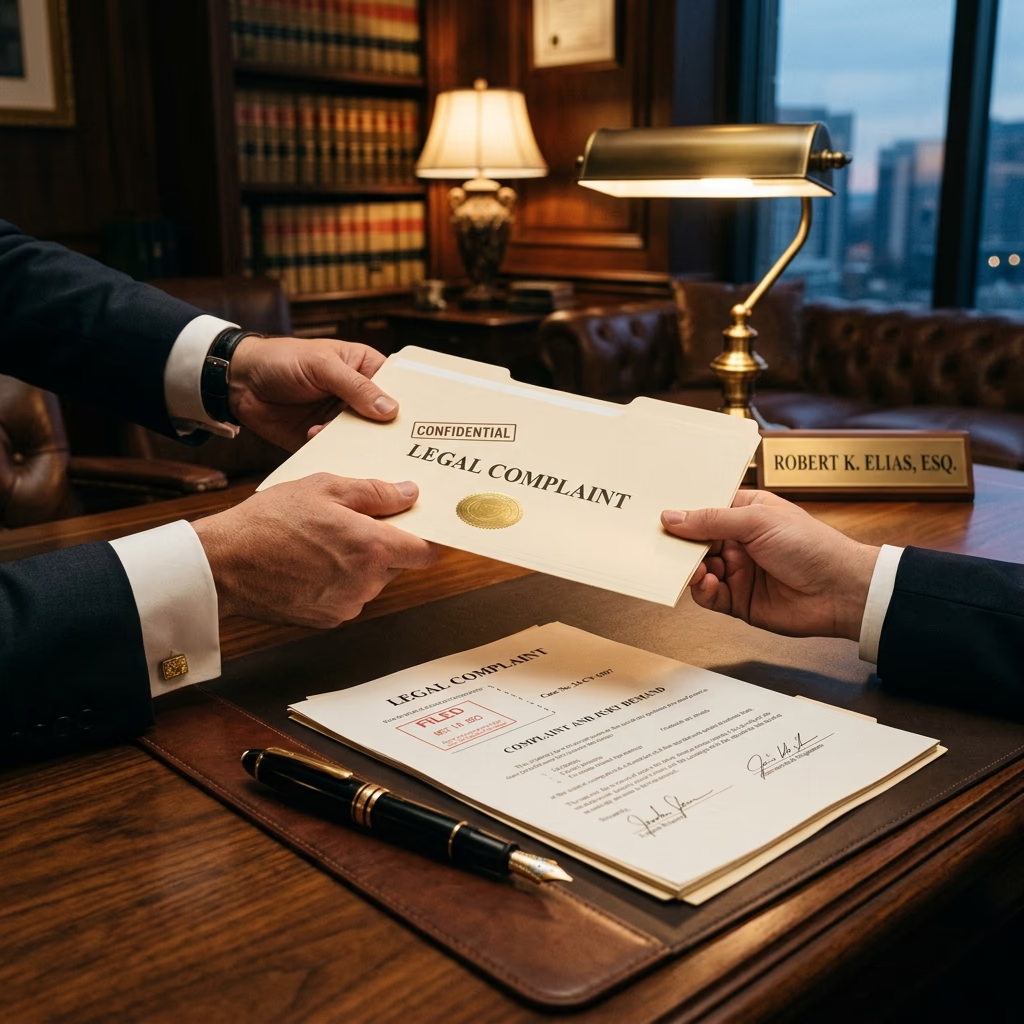
Whether there is a case against you in Turkey can be checked before you travel — without handing yourself in. This guide shows three ways, what each one shows and what can be done next.
- e-Devlet, a lawyer’s UYAP check, administrative records: what each shows — and what it doesn’t
- Appeal, appeal on points of law, reinstatement: which deadlines start running once you know
- Arrest warrant, exit ban, military service: what to clarify before entering Turkey
Av. Hasan Doğru · Turkish criminal law · Mannheim & Ankara
Legal notice: This article addresses Turkish law exclusively and is for general information only; it does not replace advice in an individual case. Doğru Kanzlei advises under § 207 BRAO exclusively in Turkish law and public international law.
Why it matters: knowing starts the clock
In Turkish criminal proceedings many rights are tied to deadlines: 7 days to apply for reinstatement against a judgment given in absence, counted from when the obstacle ends (Art. 40 of the Code of Criminal Procedure, CMK); two weeks for an appeal (istinaf) or an appeal on points of law (temyiz), counted from service of the reasoned judgment, following the 2024 reform by Law No. 7499 (CMK Arts. 273, 291); and 3 days to answer an offer of mediation (CMK Art. 253(5)). Some of these run from service, others from the moment you actually learn of the decision. Knowing about a file and then waiting can therefore cost you your remedies.
Way 1: your own check through e-Devlet
The "Dava Dosyası Sorgulama" service on Turkey's e-Devlet citizen portal (UYAP Citizen Portal) lists criminal and civil court cases opened against you: the court, the case number, hearing dates, and whether the file is open or closed. "Adli Sicil Kaydı Sorgulama" shows final convictions and can be downloaded as a document.
As a rule it does not show two things: investigations still with the public prosecutor, and arrest warrants (yakalama kararı) issued against you. "No record found" therefore does not mean "no file" — only that no case has reached court yet. Most airport surprises come from exactly this gap.
You can get an e-Devlet password from Turkish consulates abroad; access is also possible through Turkish banks' mobile apps and by NFC with the new Turkish chip ID card.
Way 2: a lawyer's UYAP check and file inspection
A lawyer admitted in Turkey can see through the UYAP Lawyer Portal whether court files exist in your name. With a power of attorney, the lawyer can inspect the file itself: the indictment, the evidence, the hearing records and — where there is one — when, by which authority and on what grounds an arrest warrant was issued (CMK Art. 153). For investigations, the lawyer applies to the prosecutor's office; if access to the file has not been restricted (CMK Art. 153(2)) the lawyer inspects it, and otherwise at least learns that the file exists and what the allegation is.
The decisive difference is the arrest warrant: e-Devlet does not show it, the lawyer sees it in the court or prosecution file. For the check you need your first and last name, your Turkish ID number (T.C. Kimlik No) and, if known, the province and year of the incident.
Worth knowing: a simple existence check on UYAP generally does not trigger any procedural step. When a power of attorney is filed to inspect the file, it becomes part of the file and the prosecutor or court knows you are represented. That is usually not a disadvantage — it is the step that makes a statement and a defence possible. On warrants specifically: Will I be arrested when I enter Turkey?
The power of attorney can be issued from abroad — at a Turkish consulate, or before a notary with an apostille. See our guide to powers of attorney for Turkey.
Way 3: administrative records — military service, passport, exit bans
Some records are administrative rather than criminal, but they can have a similar effect at the border. Military-service status (yoklama kaçağı, bakaya) can be checked through e-Devlet and the consulate. An exit ban — for example as a judicial-control measure under CMK Art. 109(3)(a) — or a passport restriction usually only becomes visible through UYAP or the relevant registers, via a lawyer.
If there is a file: what comes next
⚠️ Important: Do not travel to Turkey before the status of the file is clear and any arrest warrant has been lifted. Border checks also cover records that e-Devlet does not show.
What can be done from abroad — and what may not
Possible: checking and inspecting the file, defence and objection submissions, an application to lift an arrest warrant, appeals, mediation talks, and an application to delete a criminal-record entry. As a rule all of this runs through UYAP, without travelling to Turkey.
Possibly not:if the court requires the defendant to attend in person and does not allow a video hearing (SEGBİS), attendance takes place in Turkey. For offences with high maximum sentences, courts often do not lift a warrant without first taking a statement. Extradition or Interpol questions outside Turkey are governed by the law of that country and are outside the scope of this article.
How we help
Avukat Hasan Doğru is admitted to the Ankara Bar and registered with the Karlsruhe Bar under § 207 BRAO. He checks your file through UYAP, inspects the prosecution or court file where needed, and handles the next steps — objection, statement, lifting the warrant — under a power of attorney, without you travelling.
Have your file checked on WhatsApp →
Related pages
This article is also available in Turkish and German: Türkiye'de Hakkımda Dosya Var mı? · Läuft in der Türkei ein Verfahren gegen mich?
Legal notice: This article is for general information and does not replace advice in an individual case. Every file must be assessed separately. Avukat Hasan Doğru advises and represents exclusively in Turkish law and public international law (§ 207 BRAO).

Done-for-you file check
We find out whether anything is pending against you in Turkey — before you travel
Use the short WhatsApp intake form to describe your situation. Hasan Doğru checks the file through UYAP, inspects it at the prosecutor’s office or court where needed, and handles the next steps under a power of attorney.
What we handle
- Check through the UYAP Lawyer Portal and with the prosecutor’s office
- Assessment of stage, allegation, deadlines and any arrest warrant
- Objection, statement and application to lift a warrant
Av. Hasan Doğru · Turkish criminal law · Mannheim & Ankara